Rapid City Relocation Guide: Everything Before the Move
Rapid City offers a practical mix of regional employment, outdoor access, and a smaller-city daily rhythm, but relocation costs depend heavily on housing type, commute needs, and winter preparation. This Rapid City Relocation Guide focuses on the decisions that shape a confident move: Household budget, neighborhood fit, schools, climate, local work, and the routines that make a home feel workable after moving day.
Whether you are a healthcare professional starting a new position, an educator joining a local school, a military family arriving on PCS orders, or a household simply ready for a change, the same planning questions apply.
Rapid City: Quick Reference
- Median household income: Rapid City's median household income is $70,870, based on U.S. Census Bureau survey data for 2020 to 2024. This is a local benchmark rather than a salary guide, so relocating households should compare their own income, debt, savings, and expected utility costs before setting a monthly housing budget.
- Monthly housing costs: Census data for the same period puts Rapid City's median monthly owner cost at $1,743 for homes with a mortgage, compared with $1,963 nationally, and median gross rent at $1,109, compared with $1,413 nationally. Those figures suggest that a move budget should account for more than the purchase price alone.
- Population: The U.S. Census Bureau estimated Rapid City's population at 80,589 as of July 1, 2025, while the City of Rapid City's own year-end 2025 estimate is 86,484. That scale supports a regional mix of healthcare, retail, education, government services, restaurants, airport access, and recreation without the pace of a much larger metro.
- Housing profile: Owner-occupied homes represent 62.9% of occupied housing in Rapid City, based on 2020 to 2024 Census data. Renting first can be useful for households that want to test winter driving routes, school transportation, or neighborhood routines before making a purchase decision.
- Commute: The average travel time to work in Rapid City is 17.5 minutes, compared with 26.4 minutes nationally, which gives many households more time back in the day.
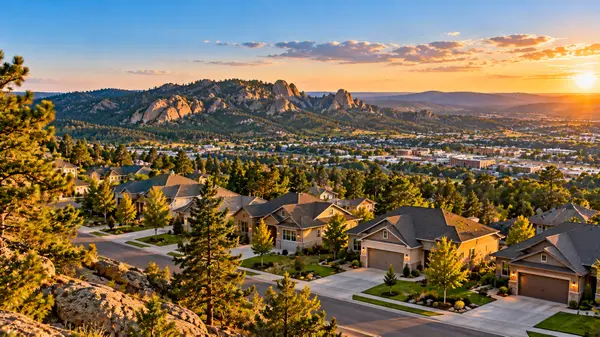
- Relocation draw: Outdoor access is a major practical advantage. Rapid Creek, Canyon Lake, Skyline Wilderness Area, and the city's trail network make hiking, cycling, fishing, and casual time outside accessible during much of the year, with seasonal planning for snow and changing weather.
Rapid City By the Numbers
Rapid City's local profile offers several useful planning benchmarks for a move. These are area-level indicators, not a substitute for current listing-by-listing pricing, lender estimates, or address-specific tax records.
| Metric | Value | Source and Period |
|---|---|---|
| Median closed sale price | $372,000 | Closed sales data, six months through August 2026 |
| Median days on market | 59 days | Aggregated listing data, September 2026 |
| Median value of owner-occupied homes | $299,400 | U.S. Census Bureau, 2020 to 2024 |
| Median household income | $70,870 | U.S. Census Bureau, 2020 to 2024 |
| Population estimate | 80,589 | U.S. Census Bureau, July 1, 2025 |
The gap between the Census home-value figure and the recent closed-sale median is worth noticing. The Census number reflects what owners across the city estimate their homes are worth over a five-year survey window, while the closed-sale median reflects what buyers paid more recently. For budgeting a purchase, recent sales are the more useful guide.
Why People Are Moving to Rapid City
Rapid City draws relocators because it functions as a regional employment and service center while keeping daily access to outdoor recreation close at hand. Healthcare, retail, education, accommodations, manufacturing, and construction all contribute to the local job base. That variety can be attractive for households that do not want to depend on a single industry.
Major employment anchors include Monument Health, Rapid City Area Schools, local government, military employment in the region, hospitality businesses, and regional retail employers. The city's role as a western South Dakota hub also supports professional services, transportation, tourism, and trades work.
Lifestyle is another concrete pull factor. Rapid Creek and Canyon Lake offer walking, fishing, and open-space options, while Skyline Wilderness Area gives residents access to trails without a long drive. Scenic drives, hiking, and winter recreation are all part of the routine for many residents.
The tradeoff is that weather affects daily planning. Snow, wind, thunderstorms, hail, and quick temperature shifts can influence vehicle choices, home maintenance, insurance conversations, and seasonal utility use. For a broader view of local housing options, this Rapid City area overview is a useful starting point.
Cost of Living in Rapid City
Rapid City's monthly housing costs run below the national median for homeowners with a mortgage and for renters, based on 2020 to 2024 Census data. Housing style, parcel size, commute pattern, and tax bill still vary from one address to the next, so a property-by-property comparison remains more useful than a broad assumption.
| Cost Measure | Rapid City | United States |
|---|---|---|
| Median monthly owner cost, with a mortgage | $1,743 | $1,963 |
| Median monthly owner cost, without a mortgage | $668 | $638 |
| Median gross rent | $1,109 | $1,413 |
| Median household income | $70,870 | $80,734 |
| Average commute to work | 17.5 minutes | 26.4 minutes |
Source: U.S. Census Bureau, 2020 to 2024 survey estimates.
South Dakota property taxes are calculated through local levies and taxable values. Reviewing a current tax bill for a specific address is more useful than relying on a broad estimate because levies and assessments can differ between properties.
Housing Market Overview
Rapid City gives buyers a broad choice of established detached homes, townhomes, condominiums, and newer construction. Detached homes can work well for households prioritizing garages, yards, storage, pets, or flexible living space. Townhomes and condominiums may appeal to buyers who want less exterior maintenance, although association rules, dues, and covered services vary by development.
Much of the local housing stock is established, which means many buyers will encounter homes with mature landscaping and varied update histories. Roof condition, insulation, windows, heating systems, driveway maintenance, and garage capacity can matter as much as layout when comparing older properties.
Recent pricing gives relocators a realistic starting point. The median closed sale price was $372,000 over the six months through August 2026, and homes for sale spent a median of 59 days on the market in September 2026. That pace can give relocating buyers some time to compare options, especially if they plan a scouting trip before committing. For a deeper look at pricing and activity this year, the 2026 Rapid City market report covers the trends in more detail.
Current inventory and marketing times still change by season, condition, neighborhood, and price band. Rather than treating the entire market as either buyer-friendly or seller-friendly, relocators should compare homes that match their household size, commute needs, preferred maintenance level, and move timeline.
Newer construction can be appealing for buyers seeking contemporary layouts and newer mechanical systems. Established areas can offer stronger proximity to parks, schools, central services, and mature streetscapes. The best option depends on whether your priority is space, convenience, lower maintenance, or a shorter commute.
Neighborhoods and Communities in Rapid City
Rapid City's neighborhoods offer different combinations of housing style, commute convenience, recreation access, and everyday services. The right fit usually comes from matching a location to your routine instead of choosing solely by a citywide price impression.
Downtown and central neighborhoods suit buyers who value proximity to restaurants, events, cultural spaces, civic services, and an in-town feel. Housing may include older detached homes, apartments, and smaller residential properties. This setting can fit professionals and households that prefer shorter trips to daily amenities.
The west side is often a strong starting point for move-up buyers seeking established residential streets, nearby retail, parks, and routes toward recreation areas. Detached homes are common, with options ranging from modest established properties to larger homes with added living space and garages.
Southeast Rapid City includes a mix of single-family homes, townhomes, and established streets near shopping, employment routes, and services. It can be practical for first-time buyers, healthcare workers with shift schedules, and relocating households focused on convenience and manageable daily drives.
North Rapid City offers varied housing ages and access to regional travel routes. Buyers should compare traffic patterns, home condition, nearby services, and winter driving considerations block by block because the day-to-day experience can vary within a broad area.
Across the city, current homes for sale should be evaluated alongside lot maintenance, parking, garage space, school enrollment logistics, and the route you expect to drive most often.
Rapid City Jobs and Economy
Rapid City's economy is anchored by healthcare, retail, education, accommodations, construction, manufacturing, government, and professional services. Monument Health, Rapid City Area Schools, local government, hospitality businesses, and regional retail operations are important employers. That combination supports work in clinical care, education, skilled trades, customer service, public administration, tourism, and business services.
For healthcare professionals, the depth of the local health system means many households can weigh hospital proximity and shift-friendly commutes when choosing a neighborhood. Educators may want to compare school locations against housing options before deciding where to search. Military families can benefit from mapping the daily drive and confirming VA loan eligibility early, since PCS timelines often leave less room for a long home search.
The local median household income is $70,870. Individual compensation can vary widely by profession, credentials, military status, shift schedules, and employer, so households planning a move should evaluate their own expected income against housing, transportation, childcare, and seasonal home costs.
Remote workers should also verify internet availability for the specific address they are considering. Census data shows 90.3% of Rapid City households have a broadband subscription, but service options still vary by street. Workspace needs, winter driving, airport access, and proximity to everyday services can influence which part of Rapid City feels most practical.
Schools and Education in Rapid City
Rapid City offers public, private, and postsecondary education options, but families should review official school information, attendance boundaries, enrollment procedures, transportation, and program availability for the specific address they are considering. Rapid City Area Schools is the principal public district serving the city, with elementary, middle, high-school, alternative, and online-learning options.
Individual school information varies by grade level, program, staffing, and enrollment procedures, so families should avoid drawing districtwide conclusions from one school's rating or profile.
Private options in Rapid City include Rapid City Christian School, St. Pauls Lutheran School, Zion Lutheran School, and St. Thomas More High School. Postsecondary institutions include South Dakota Mines and Western Dakota Technical College, which contribute to regional STEM, technical, and workforce-training opportunities.
For households with school-age children, the most useful next step is to confirm boundary assignment and program availability before making an offer or signing a lease.
Climate and Lifestyle
Rapid City has four distinct seasons, with warm summer days, cold winter conditions, and weather changes that can affect driving and home upkeep. Based on National Weather Service climate normals for 1991 to 2020 at Rapid City Regional Airport, the annual average high is 60°F and the annual average low is 34°F. January averages range from about 13°F to 36°F, and July averages range from about 58°F to 86°F.
The same normals show about 17.4 inches of total precipitation and 48.5 inches of snowfall in a typical year. Summer supports hiking, biking, fishing, and time around Canyon Lake, Rapid Creek, Skyline Wilderness Area, and city parks. Fall often brings comfortable outdoor conditions along with sharper temperature shifts.
Winter requires realistic preparation for snow removal, cold-weather driving, appropriate clothing, and heating costs. Newcomers should also consider wind and hail exposure when comparing insurance coverage, roof condition, garage space, and vehicle parking.
Rapid City's climate can reward households that enjoy year-round outdoor recreation and are prepared to adapt their routines by season. A practical relocation plan includes budgeting for seasonal equipment, home maintenance, and weather-related travel adjustments.
What to Budget Beyond the Purchase Price
- Property taxes: Property taxes depend on taxable value and local levies. Review the current tax bill for each address, because two similar homes can have different tax obligations based on assessment and taxing districts.
- Homeowners insurance: Premiums depend on roof age, deductible, construction type, coverage limits, and insurer. Wind and hail exposure make roof coverage and deductible details especially important to compare.
- Utilities: Winter heating can be a meaningful household expense, particularly in larger homes or properties with older systems. Ask for recent utility history on any home you are considering.
- Vehicle costs: Many households benefit from a reliable vehicle. Budget for fuel, registration, maintenance, winter-ready tires, and occasional weather-related travel adjustments.
- HOA fees: Townhomes, condominiums, and some newer communities may have association dues. Review covered services, rules, reserve funding, and possible special assessments before committing to a property.
If you are buying for the first time or it has been a while since your last purchase, this step-by-step look at buying in Rapid City walks through the process from pre-approval to closing.
Rapid City Relocation Decision Framework
Rapid City can suit movers who want city services and outdoor access within a short drive. The questions below can help you decide where in the city to focus your search.
| Factor | What It Looks Like in Rapid City | What to Check |
|---|---|---|
| Home-price picture | Established and newer housing across several property types | Recent sales for homes similar to the ones you are touring |
| Monthly costs | Median mortgage and rental costs below the national median | Tax bill, insurance quote, and utility history for each address |
| School considerations | Public, private, and postsecondary options | Attendance boundary and enrollment steps for the specific address |
| Employment access | Regional healthcare, education, retail, government, and service hub | Drive time to your workplace in winter conditions |
| Climate considerations | Snow, wind, hail, and temperature swings | Roof age, garage space, and heating system condition |
| Lifestyle fit | City amenities with creek, lake, and trail access | Proximity to the parks and services you will use most |
The best location depends on the routine you expect after moving, especially commute timing, preferred home maintenance level, access to services, and desired outdoor lifestyle.
Frequently Asked Questions About Moving to Rapid City
Is Rapid City a good place to live?
Rapid City can be a good fit for people seeking regional amenities, employment variety, outdoor recreation, and a smaller-city pace. The U.S. Census Bureau estimated the population at 80,589 as of July 1, 2025, a size that supports healthcare, retail, dining, education, parks, and creek-side recreation while keeping many daily destinations relatively accessible.
How affordable is housing in Rapid City?
Affordability depends on the property, location, condition, and commute needs. The median closed sale price was $372,000 over the six months through August 2026, while Census data shows median monthly owner costs with a mortgage of $1,743, below the national median of $1,963. Comparing total monthly costs for specific homes is more useful than relying on a single citywide figure.
What are the job prospects in Rapid City?
Employment opportunities span healthcare, retail, education, accommodations, construction, manufacturing, government, and professional services. Monument Health, Rapid City Area Schools, local government, military employment, and visitor-serving businesses all contribute to the employment base.
What should I know about schools in Rapid City before moving?
Families should verify the official attendance boundary, enrollment process, transportation options, and programs for the address they are considering. Rapid City has public, private, and postsecondary options, but individual school characteristics can differ substantially by grade level and program.
What are the biggest costs to budget for when relocating to Rapid City?
A realistic first-year budget includes property taxes, homeowners insurance, utilities, moving expenses, vehicle costs, and possible HOA fees. Winter driving, snow removal, heating, and weather-related maintenance are also important practical costs for new residents.
Planning a Move to Rapid City?
Ashley Reed is a South Dakota Broker Associate who has called Rapid City home since 2006 and bought her own first home here in 2014. She works with relocating households, healthcare professionals, educators, and military and VA buyers, helping them compare neighborhoods, home options, and real move-in costs before they commit. If you would like a local perspective on where to focus your search, call or text (605) 270-0655, email ashley@oakandkeysd.com, or reach out through the contact page.
Recent Posts
GET MORE INFORMATION